
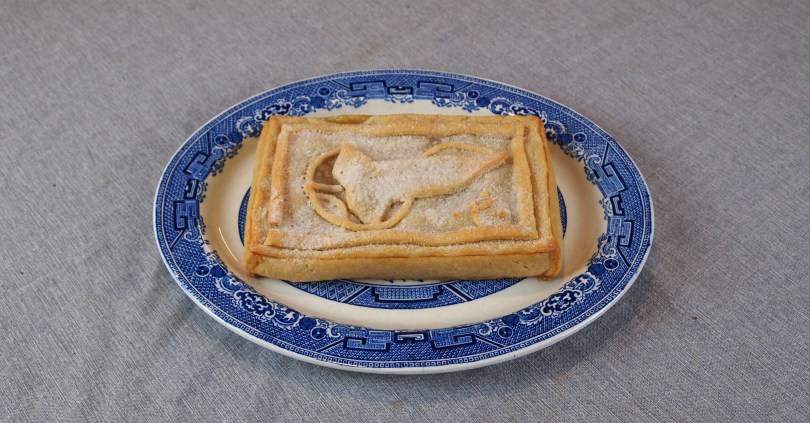
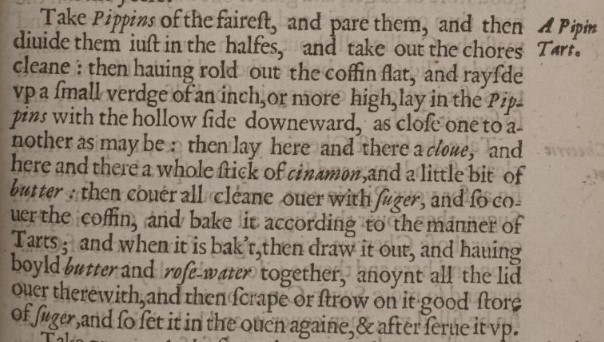
Pippins are a variety of apple mainly grown for use in hard cider today. Historically, however, they were often used in puddings and baked desserts such as this 1623 recipe from Gervase Markham for A Pippin Tart.
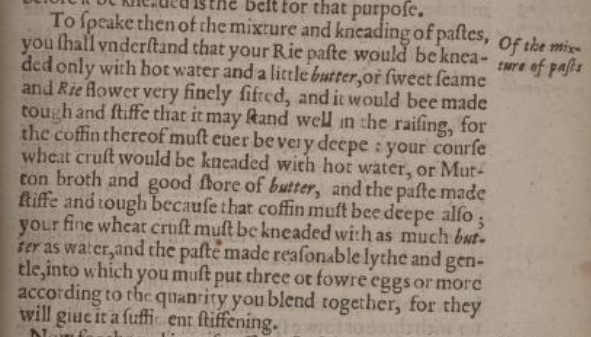
Free-standing pies and tarts like this one were often made using hot water pastry, for which Markham provides several different recipes in his book. This particular one is very rich; it calls for using “as much butter as water” and is edible, although not as delicate as shortcrust or puff pastry. For larger pies, the pastry was often made so tough that it was not meant to be eaten, but used just as a container for the fillings.
While Gervase Markham does give relative quantities of butter and water in his recipe, he does not specify how much flour should be used, so I followed Townsends’ directions for making the same pastry (see also for an excellent explanation of why pastry cases were often called “coffins”).
17th century pies could be very elaborately decorated. I was inspired by some of the pastry designs below, from the 1665 book E. Kidder’s receipts of pastry and cookery for the use of his scholars:
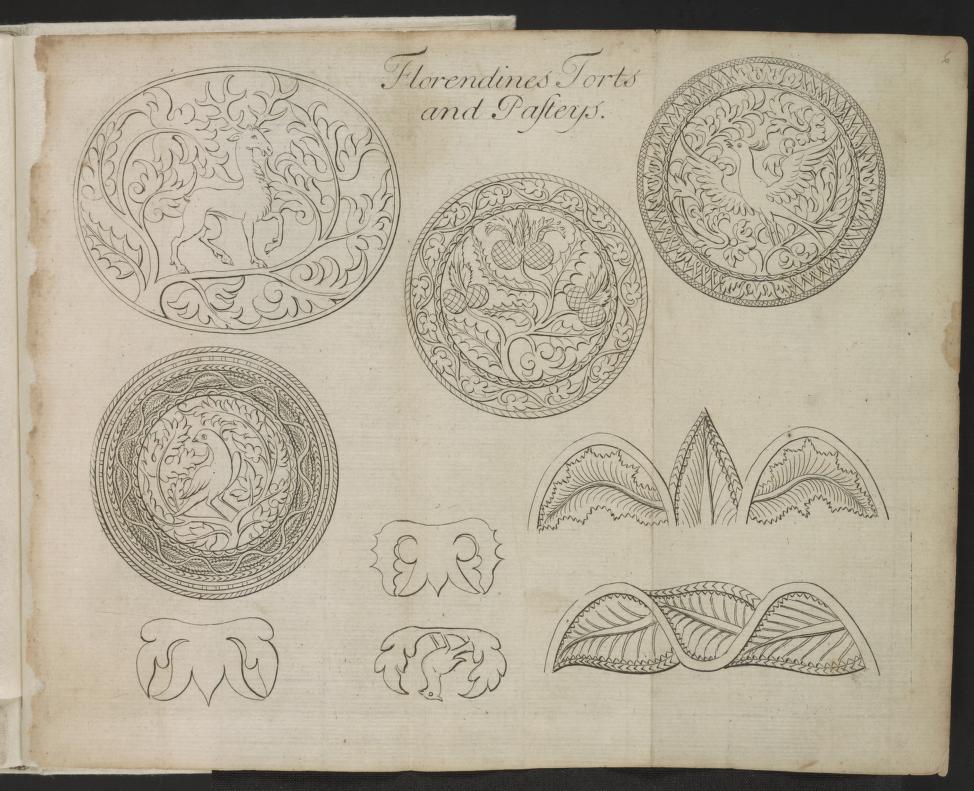
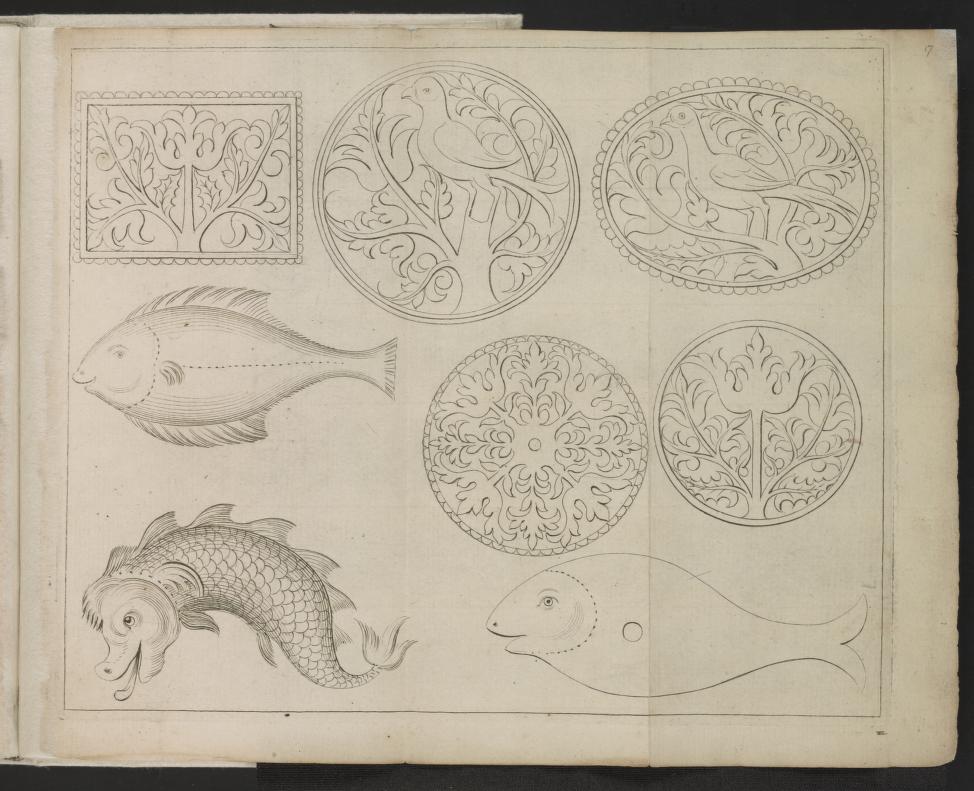
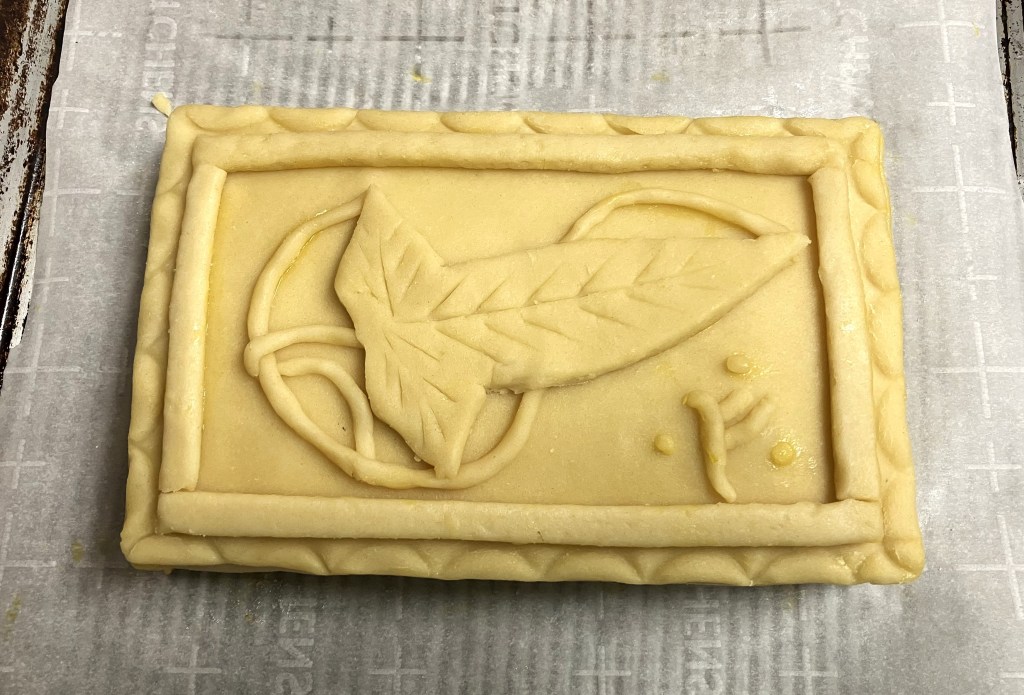
Ultimately, however, I wanted to try something a little bit simpler for my first foray into hot water pastry…and because the word “pippin” always makes me think of Pippin Took from The Lord of the Rings, I ended up creating my own design of a Lothlorien-inspired leaf and Gandalf’s rune. It may not be 100% historically accurate, but leafy designs were popular in the 17th century and I’m usually willing to sacrifice a bit of historical accuracy if it means I can incorporate some LOTR fandom.
A Pippin Tart:
- 8 oz butter
- 8 oz water
- 4 cups flour, plus more for kneading and rolling out
- 1 egg, beaten
- about 3-4 pippins or other apples
- 2 cinnamon sticks
- a few whole cloves
- about 1/4 cup sugar, or to taste
- 1 egg, beaten
- 1 tbsp butter, melted
- a few drops of rosewater
- To make the hot water pastry, heat the butter and water together in a saucepan until it starts to boil.
- Pour the hot butter and water on top of the flour in a large bowl. Stir together.
- Add the beaten egg and stir in to the dough. When the dough is cool enough to handle, knead by hand until it is smooth. You can add a little more flour while kneading if the dough seems too soft or sticky, but keep in mind that it will firm up more later.
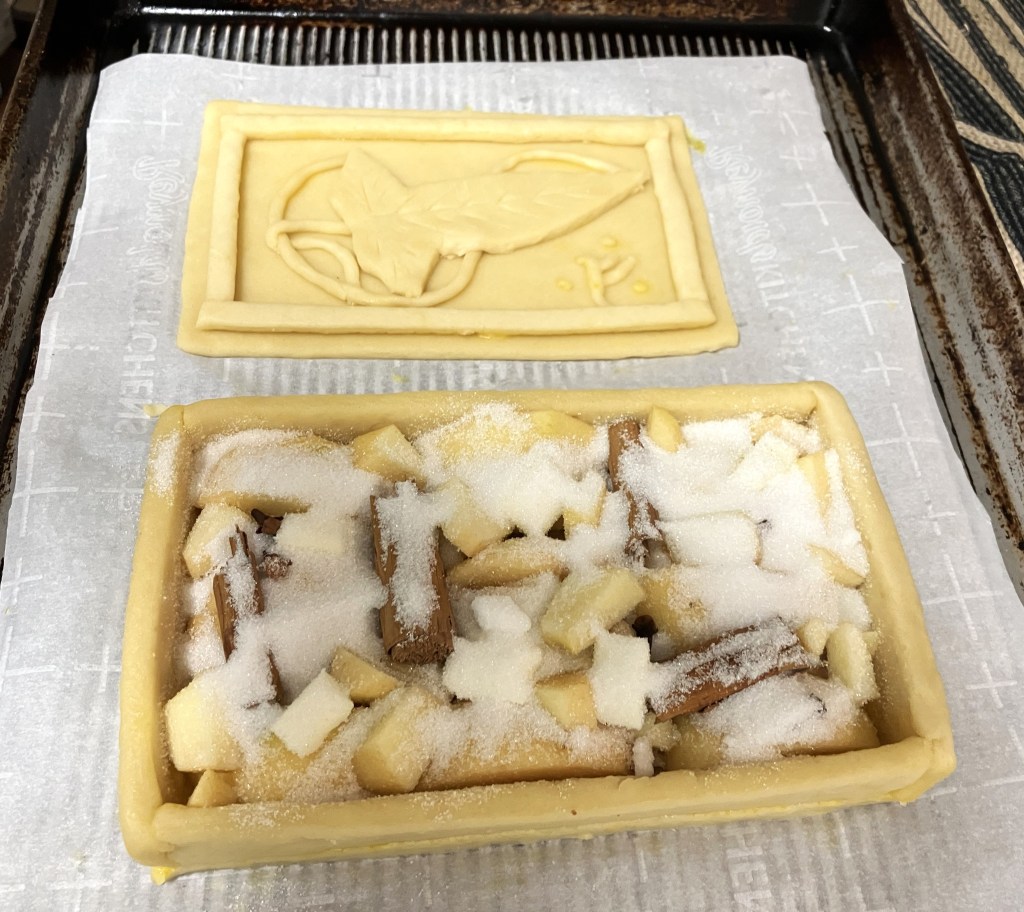
- Roll out the dough to about 1/4″ thick and cut out all the shapes you will need for your pie. I used two rectangles about 5-ish by 7-ish inches for the base and top of the pie, 1-inch tall rectangles for the sides, and additional shapes for the leaf and other decorations. I ended up with a lot of extra pastry, so I could have made a larger pie…but that extra pastry came in handy later when my cat absconded with one of the side pieces and I had to cut a new one.
- The pastry pieces will be too soft to use when they are first cut out, so let them sit in a cool place for at least six hours, or even overnight (making sure to keep them out of reach of any cats).
- When the pastry pieces are stiff enough to put together, brush the edges with beaten egg yolk to stick them all together. Put together the base of the tart with the sides, and attach any decorations to the lid. Place in a cold place, preferably the fridge, for at least 30 minutes while you cut the apples.
- Peel and core the apples. Markham’s original recipe calls for using the apples just cut in half; since my apples were fairly large and my tart was small, I cut mine in smaller slices so they would fit better.
- Place the apples in the tart, scatter the cinnamon sticks and cloves over them, dot them with a few small pieces of butter, then pour over the sugar. Attach the lid with more beaten egg yolk.
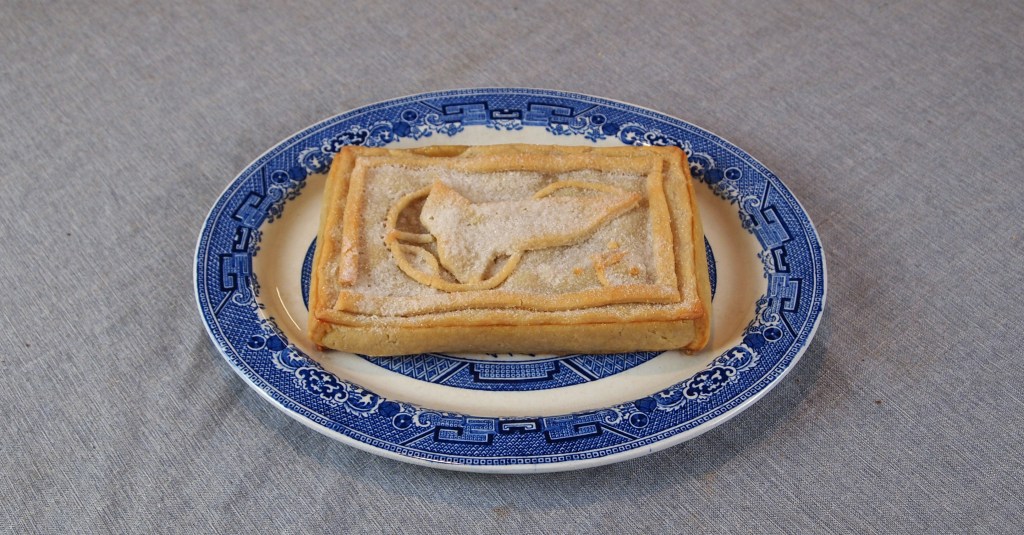
- Bake at 350 degrees for about 30 minutes, depending on the size of your tart. When the edges are just starting to turn golden-brown, pull it out of the oven and brush the top with melted butter mixed with a few drops of rose water. Sprinkle with sugar and place back in the oven (still at 350 degrees) until the sugar starts to melt and look shiny, about 5-10 minutes.
- Let the tart cool, then serve.
Tasting notes:
The filling of this tart is delicious, as baked apples usually are, although you do have to be wary of the whole cloves and cinnamon. Eating this probably would have been easier if I had cut the pippins in half as Gervase Markham instructs; then you would be able to cut off the lid and simply pick individual pippins out of the tart, rather than eating it in a slices like with a modern pie. I was a contrarian though and did cut mine into slices, mostly because I wanted to actually try the pastry. It was surprisingly good – definitely a bit stodgier than the ideal pie crust, but certainly still edible (and very buttery). The one thing I didn’t like about this tart was the sugar topping at the end, since it ended up obscuring the details of my design. The sides of my tart also buckled a little while baking. I think I may have needed to leave the pastry out even longer to firm up before using it. Still, it remained structurally intact with no major leakage, so I consider my first venture into hot water pastry a success!
References:
Markham, G. (1623). Country contentments, or The English huswife. London : J. Beale for R. Jackson. https://archive.org/details/b30333143/page/106/mode/2up

